
In today’s fast-paced digital world, microapps are reshaping how enterprises build, scale, and streamline software.
These lightweight, task-focused tools are redefining application architecture, helping teams boost agility, reduce complexity, and enhance user experience.
As we move further into 2025, businesses are prioritizing efficiency and modularity, and microapps are leading that charge.
Whether you’re an enterprise architect, developer, or product leader, understanding how microapps fit into the next decade of digital transformation will give you a serious edge.
In this guide, we’ll explore the architecture, trends, and enterprise applications of these lightweight apps, along with real-world examples that demonstrate how this evolution is already transforming industries.
The Evolution Toward Microapps
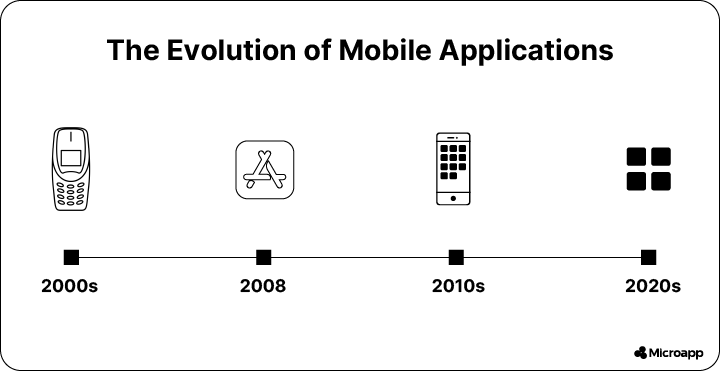
As mobile and enterprise applications grew more complex over the past decade, users began demanding faster, simpler, and more focused experiences. The rise of microapps answered that call.
Instead of managing heavy, feature-packed software, these modular apps take a “less is more” approach, delivering a single task within a lightweight, containerized environment.
This evolution mirrors a broader industry shift toward modular design, where agility and user-centricity matter more than ever.
As Forbes noted in an early exploration of the concept, microapps have become essential to mobile and enterprise ecosystems by allowing users to “do one thing well, fast, and seamlessly.”
What Are Microapps (and Why They Matter in 2025)?
A microapp is a small, focused application designed to perform one specific task efficiently, often embedded within a larger ecosystem.
Unlike traditional apps, lightweight apps don’t require you to rebuild the wheel; they integrate directly with your existing platforms, offering targeted, contextual functionality.
Example: A leave request microapp inside an HR system or a data dashboard inside a CRM — all working independently yet seamlessly connected.
💡 Tip: Check out Microapp.io to explore how our modern teams are deploying these modular apps for faster innovation.
Microapps vs Microservices vs Monoliths
| Feature | Monolithic Apps | Microservices | Microapps |
|---|---|---|---|
| Architecture | Single, large codebase | Service-oriented | Modular front-end components |
| Scalability | Limited | High | Extremely high |
| Deployment | Slower | Faster | Instant |
| Focus | Entire application | Backend logic | Specific user task |
| Example | ERP system | Order service | Order tracking widget |
💬 FAQ: Are microapps replacing microservices?
Not exactly. Microapps complement microservices. While microservices handle backend processes, these apps focus on delivering dynamic front-end experiences quickly and flexibly.
Microapp Architecture: How It Works
Microapps typically follow a three-layer architecture:
| Layer | Function | Example |
|---|---|---|
| Presentation Layer | Front-end UI (React, Angular, Vue) | Form microapp, dashboard microapp |
| Integration Layer | Connect APIs, data sources, services | REST/GraphQL APIs |
| Runtime Layer | Manages deployment & sandboxing | Microapp.io/apps |
🚀 Tip: Use a containerized architecture or low-code platform like Microapp to speed up your development lifecycle.
💬 FAQ: How do microapps integrate with legacy systems?
They connect through REST APIs or integration layers — so you can enhance legacy apps without rewriting code.
Key Trends Shaping Microapps in the Next Decade
1. AI-Powered Personalization
In 2025, AI-driven microapps adapt content, UI, and workflows based on user behavior and predictive analytics.
Example: A sales microapp can automatically prioritize leads by analyzing historical conversion patterns and current engagement levels. Similarly, an internal HR microapp could recommend personalized onboarding steps based on the employee’s role, location, and prior experience.
Impact:
- 25–40% faster decision-making
- Reduced user friction by delivering the needed functionality
💡 Tip: Consider integrating lightweight AI microservices into your modular apps to provide real-time recommendations or predictive insights.
2. Low-Code and No-Code Platforms
Businesses are increasingly using platforms like Microapp to build modular apps without backend expertise. These tools allow non-developers to create production-ready apps in minutes rather than weeks.
Example: A finance team builds a microapp to monitor daily expenses, generate alerts, and export reports automatically — all without writing a single backend line of code.
Impact:
- 50–70% faster development cycles
- Reduced dependency on engineering teams
- Empowerment of business users to solve problems independently
3. Integration with Superapps
Superapps like Slack, Teams, and WeChat are embedding these apps directly into their ecosystems.
This allows users to complete tasks such as expense approvals, sales check-ins, and customer support ticket updates without switching between apps.
Example: In Slack, a microapp lets employees request leave, track approvals, and view remaining balances right within the chat interface.
Impact:
- 20–30% reduction in context-switching delays
- Enhanced adoption rates due to seamless integration
- Consolidated workflows inside tools that users already engage with daily
4. Enhanced Security and Compliance
With modularity comes risk. Microapps are increasingly leveraging OAuth 2.0, Zero Trust, and containerized sandboxing to maintain enterprise-grade security.
Example: Financial services deploy these lightweight apps for real-time loan approvals. Each microapp uses isolated containers and secure APIs to ensure sensitive data never leaves its controlled environment.
Impact:
- Protects sensitive corporate and user data
- Reduces risk of compliance violations
- Maintains enterprise confidence in microapp deployments
💬 FAQ: Are microapps safe for enterprise use?
Yes — when managed via a secure orchestration layer, these front-end modules can meet the same compliance standards as full-scale enterprise systems.
5. Industry-Specific Microapps
Microapps are increasingly tailored to specific industries:
- Healthcare: Apps for medication reminders, telehealth intake forms, and wearable monitoring.
- Finance: Apps for real-time stock alerts, instant payments, or automated reconciliation.
- Retail & eCommerce: Apps for inventory updates, loyalty program tracking, and personalized promotions.
Impact:
- Streamlined processes tailored to industry needs
- Reduced training overhead due to simple, task-focused interfaces
- Higher adoption rates within specialized teams
💡 Tip: Start with one industry-focused microapp to solve a high-impact, repetitive task, then expand to other areas.
👉 Find out how you can use Enterprise Apps and Microapps
Advantages of Microapp Architecture

| Feature | Benefit |
|---|---|
| Simplified UX | Clean interface focused on a single task, reducing cognitive load |
| Faster Development & Deployment | Quick design, testing, and rollout without disrupting larger systems |
| Scalability & Flexibility | Containerized apps allow modular integration and future expansion |
Tips:
- Use microapps to streamline repetitive workflows.
- Embed apps in containers for modular scalability.
Real-World Case Studies: Microapps in Action
1. QuickHR – Smarter HR Workflows
Before: Managing leave, attendance, and payroll required multiple dashboards.
After: QuickHR implemented these apps for onboarding, payroll, and requests. Each department runs its own microapp connected via APIs.
Results:
- 40% faster employee onboarding
- 60% drop in HR service requests
- Improved cross-department collaboration
💡 Tip: Combine your mini-application with productivity timers — see this guide for actionable strategies.
2. HealthCheck – Modular Healthcare Management
Before: Hospital systems required full-page reloads and long patient forms.
After: Microapps for patient intake, doctor schedules, and real-time reporting were introduced, integrated with wearables for live vitals monitoring.
Results:
- Reduced patient wait times by 35%
- Enhanced data accuracy
- Seamless integration with wearable devices
💡 Tip: Deploy updates in hours, not months, using containerized microapps.
3. 2025 Enterprise Example: AI-Driven CRM Dashboards
Scenario: Salesforce and HubSpot are experimenting with AI-powered microapps to deliver real-time insights into customer interactions.
How It Works: Deployed in containerized environments (Docker & Kubernetes), microapps analyze conversations, track sentiment, and suggest next steps.
Impact:
- Hyper-personalized sales recommendations
- Faster decision-making
- Cross-team alignment with modular dashboards
4. Industry-Specific Microapps: Retail & Finance
Retail Example: Inventory microapps track stock in real-time and automate promotions.
Finance Example: Banking microapps deliver instant fraud alerts, payments, and AI-driven investment suggestions.
Impact:
- Reduced clutter, faster decision-making
- Secure, compliant modular apps
- Quick deployment for changing market needs
Challenges & Best Practices
Common Challenges:
- Fragmented user experiences
- Version control between microapps
- Maintaining consistent design systems
Best Practices:
- Centralize your design language with Figma or Storybook
- Automate CI/CD for microapp deployments
- Use API gateways for secure communication
- Choose frameworks optimized for modularity (React, Web Components)
💡 Tip: Regularly benchmark performance metrics using lightweight monitoring tools like Google Lighthouse.
The Future of Microapps (2025–2035)
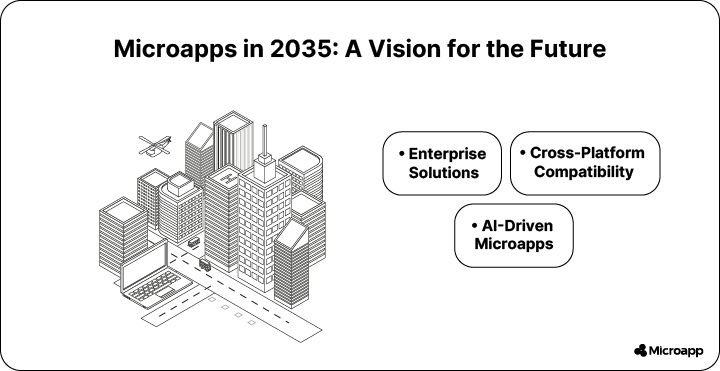
As enterprises embrace composable architectures and AI-driven automation, microapps are becoming the backbone of digital transformation. Expect:
- Autonomous orchestration (AI managing microapp workflows)
- Cross-platform interoperability
- Serverless scalability
📈 By 2030, Gartner predicts 80% of enterprise software will use microapp-style modularization for internal tools and customer experiences.
The Decade of Microapps Has Begun
If your business is aiming for speed, modularity, and innovation, microapps are your key to staying competitive. Start small, build one microapp that solves a recurring task, then scale.
👉 Explore ready-to-use solutions at Microapp or create one yourself to launch your next digital breakthrough.