

If you’ve ever wondered, “What is a good profit margin for my business?”, you’re not alone. In 2025, the average healthy net profit margin sits around 10%, while anything above 20% is considered excellent — depending on your industry.
In this guide, you’ll discover: what a good profit margin really means, how margins differ by industry, and easy tips to improve your profitability
💡 Quick Takeaway: A reasonable profit margin is around 10% net, 50–70% gross, and 10–20% operating, but exact numbers vary by industry and business type.
What Are Profit Margins and Why Do They Matter
Your profit margin indicates how much money your business retains after covering its costs; it’s the ultimate measure of financial efficiency.
The three key types of profit margins:
- Gross Profit Margin: Measures profit after subtracting the cost of goods sold (COGS).
- Operating Profit Margin: Considers operating expenses like salaries, rent, and marketing.
- Net Profit Margin: Reflects total profit after all costs, taxes, and interest.
Each type tells you something different: gross margin measures production efficiency, operating margin shows business efficiency, and net margin reflects overall profitability.
👉 Learn more about financial planning in What Is Project Planning? and explore The Best Tax Software.
What Is a Good Profit Margin in 2025?
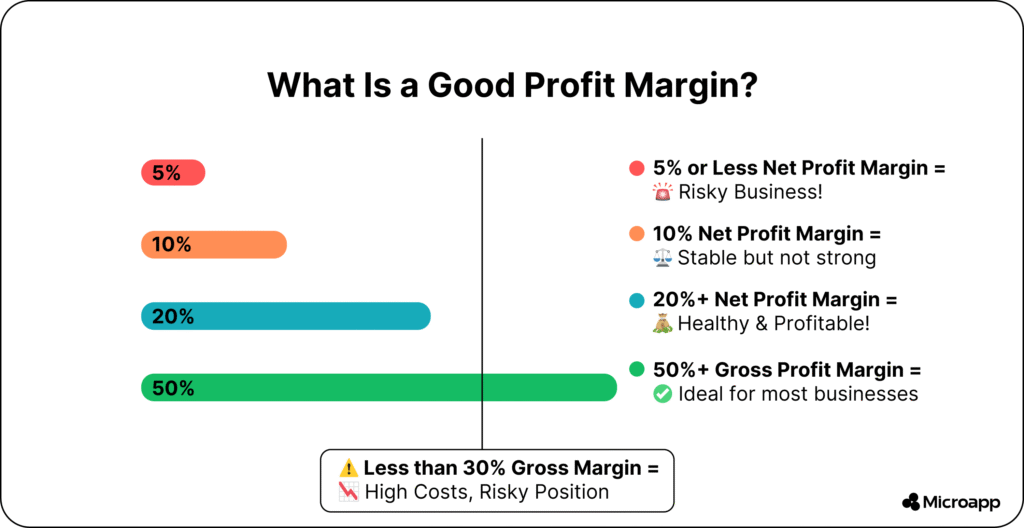
In 2025, a good profit margin depends on your business model, market, and scale. Generally:
- Net Profit Margin: 10% = average, 20% = good, 30%+ = excellent
- Gross Profit Margin: 50–70% is strong
- Operating Profit Margin: 10–20% is healthy
What Is a Good Net Profit Margin?
Your net profit margin indicates the percentage of actual profit remaining after deducting taxes and all other expenses.
Formula:
👉 (Net Profit ÷ Revenue) × 100
| Business Type | Good Net Margin | Low Net Margin |
|---|---|---|
| Retail | 5–10% | Under 2% |
| Services | 15–25% | Under 10% |
| Manufacturing | 10–15% | Under 5% |
📊 Is 10% a good profit margin? Yes — across most industries, a 10% net margin is considered a healthy level.
What Is a Good Gross Profit Margin?
Your gross margin shows how efficiently your company produces or delivers products before other costs.
Formula:
👉 (Revenue – COGS) ÷ Revenue × 100
Service-based businesses (like software or consulting) often enjoy high gross margins (70–80%), while product-based or retail businesses may sit closer to 40–60%.
📘 Related: Learn more in How to Calculate Profit Margin.
💬 What’s a healthy profit margin for a product-based business? A 40–60% gross margin is typically healthy for physical product sellers.
What Is a Good Operating Profit Margin?
The operating profit margin focuses on day-to-day efficiency, specifically, how much you earn after paying for operations but before taxes and interest.
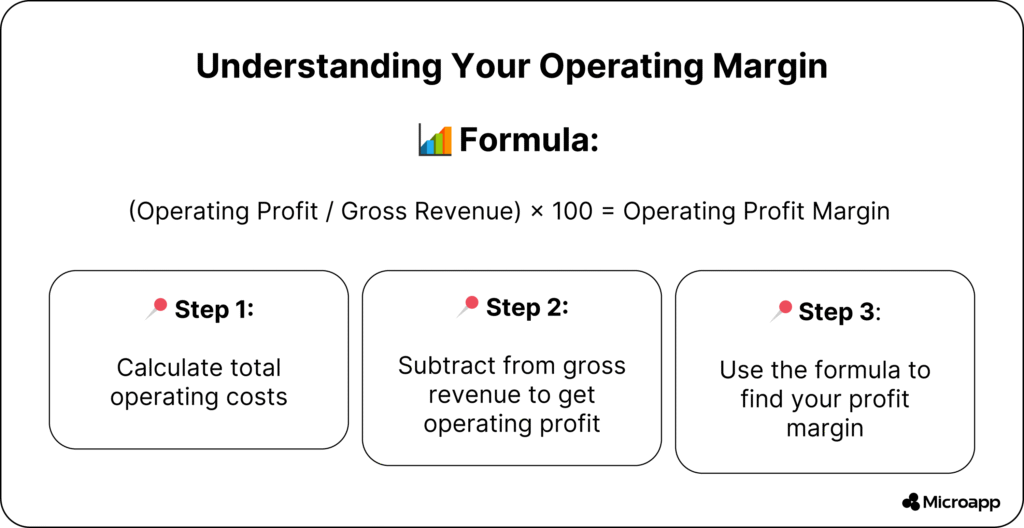
Formula:
👉 (Operating Profit ÷ Revenue) × 100
A margin of 10–20% is substantial for most companies.
💡 Tip: Boost your efficiency with automation tools like Clinic Management Software that cut down repetitive tasks and operational waste.
Also Read: Understanding What Is an Invoice helps you streamline your billing process and get paid faster — a crucial part of maintaining healthy margins.
Average Profit Margins by Industry (2025 Data)
| Industry | Average Net Margin |
|---|---|
| Retail | 2–5% |
| Construction | 5–7% |
| Consulting | 15–25% |
| SaaS / Tech | 25–35% |
| Manufacturing | 10–15% |
| Healthcare | 8–12% |
| Restaurants | 3–6% |
📈 Analysis:
- Retail stays slim due to competition and high overheads.
- Consulting and SaaS benefit from low variable costs.
- Manufacturing maintains steady margins through economies of scale.
👉 For a more comprehensive view, explore the table here.
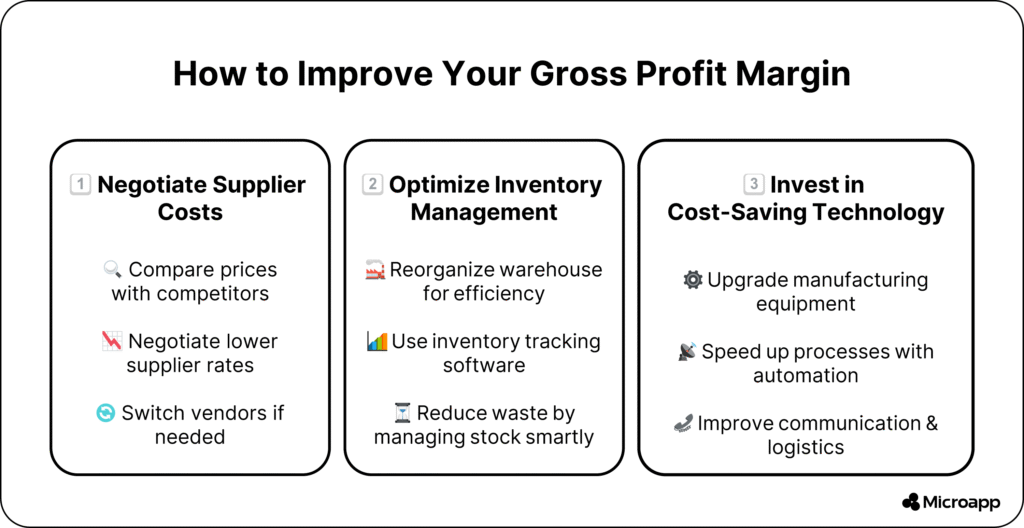
How to Improve Your Profit Margins (Actionable Tips)
Ready to boost profitability? Try these easy, proven strategies 👇
1. Optimize Supplier Costs
- Review contracts annually
- Negotiate better bulk or early-payment discounts
2. Streamline Inventory Management
- Automate stock tracking with tools like Zoho Inventory
- Reduce waste and overstocking
3. Improve Operational Efficiency
- Audit business expenses
- Automate repetitive workflows using Microapp
4. Refine Your Pricing Strategy
- Use value-based pricing rather than undercutting competitors
- Bundle complementary products or services
5. Invest in Technology
- Track cash flow and profit trends digitally
- Explore the Budget Planner App for smarter financial tracking
💬 How can I improve my profit margin quickly? Focus on reducing operational costs, adjusting pricing, and automating workflows with smart tools.
👉 See how SQL supports real-time financial tracking and reporting.
How to Calculate Profit Margins (With Formulas)
Gross Profit Margin = (Revenue – COGS) ÷ Revenue × 100
Net Profit Margin = (Net Profit ÷ Revenue) × 100
Operating Profit Margin = (Operating Profit ÷ Revenue) × 100
🧾 Example: If your company earns $100,000 revenue and $20,000 net profit → (20,000 ÷ 100,000) × 100 = 20% net margin
💡 Tip: Use Microapp’s Profit Margin Calculator to automate your calculations and visualize results instantly.
💡 Related Tip: Understanding the Time Value of Money ensures you consider inflation and opportunity cost in profit planning.
What Is a Good Profit Margin for Small Businesses?
For small businesses, a net profit margin of 5–10% is typical. Anything above 15% is considered excellent.
- Retail / Food: 3–6%
- Service-based businesses: 15–25%
- E-commerce / Tech: 20–30%
📚 What is a good profit margin for a small business? A 10% net margin is solid; a margin of 15% or more indicates strong performance.
Building a Healthier Profit Margin
Understanding your profit margin isn’t just about crunching numbers; it’s about unlocking smarter business growth.
By tracking costs, refining pricing, and optimizing operations, you can turn every sale into sustainable profit. Even minor improvements compound over time.
📊 Ready to grow smarter? Utilize Microapp’s smart tools to streamline financial tracking, enhance efficiency, and monitor your margins in real-time.