
Project Planning: How to Plan Projects for Success

Every successful project starts with a plan. Without a structured approach, even the best ideas can fail due to missed deadlines, budget overruns, or miscommunication. That’s where project planning comes in.
As a project planner, you can reduce risks, align your team, and maximize efficiency. By following a clear process, you can ensure that every task, resource, and milestone contributes to the overall goal.
What is Project Planning?
Project planning is the process of defining objectives, identifying tasks, allocating resources, and setting a timeline for a project. It ensures everyone knows their responsibilities, deadlines, and the overall project scope.
Think of it as a roadmap that guides your team from start to finish. Without it, you’re essentially navigating without a map or directions.
🗂️ How is project planning different from project execution? Planning defines what to do and how to do it. Execution is the phase where you implement that plan and track progress.
💡 Tip: Effective project planning is the backbone of project success. Studies show that projects with a defined planning phase are significantly more likely to succeed.
Why Project Planning Matters
Imagine starting a road trip without a map, gas, or a clear destination — you might get somewhere, but not where you intended. That’s precisely what happens when teams skip project planning.
Proper project planning gives you clarity, direction, and control over every stage of your project. It ensures that everyone—from stakeholders to team members—knows what needs to be done, when it needs to be done, and by whom.
Here’s what happens when project planning is done right 👇
1. Clear Objectives = Clear Success
When you define goals early, your team knows what success looks like.
For example, if your goal is to launch a new app in six months, your project plan breaks that big goal into smaller, achievable milestones, such as UI design, backend setup, beta testing, and launch.
⚡ Without a plan, teams often work hard but not necessarily in the right direction—leading to missed deadlines or wasted resources.
2. Efficient Resource Management
Good project planning helps you allocate resources wisely — people, tools, and budget.
For instance, if a marketing project requires designers, copywriters, and paid ads, your plan should schedule their contributions strategically to avoid downtime or overlap.
⚡ Example: A marketing agency using project planning software noticed they reduced idle time by 25% because every designer knew their exact timeline.
3. Better Communication and Accountability
A solid plan keeps everyone aligned. It defines who does what and when, minimizing confusion and unnecessary meetings.
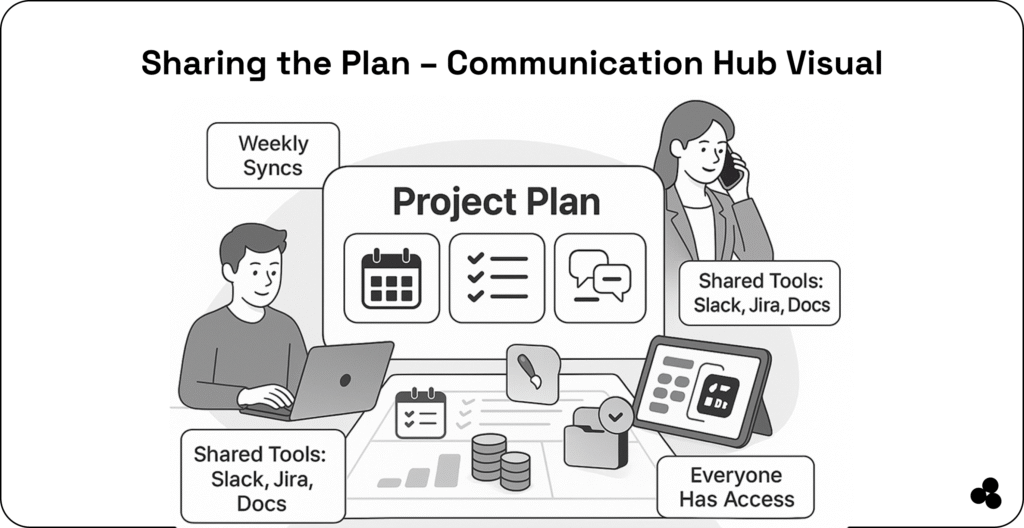
When stakeholders have visibility through a project dashboard or Gantt chart, they can track progress without needing to micromanage.
⚡ Example: In a website redesign project, precise planning helped the content and development teams work in sync, cutting project delays by two weeks.
4. Risk Reduction and Faster Problem-Solving
Every project faces risks—delays, cost overruns, scope changes—but with project planning, you can predict and mitigate them early.
You’ll identify dependencies, anticipate blockers, and prepare backups.
⚡ Example: A construction firm that included a weather contingency in its project plan avoided costly downtime during unexpected storms.
5. Cost Control and Budget Accuracy
Without a plan, budgets can spiral out of control. Detailed planning helps you estimate costs, track spending, and manage scope creep.
⚡ Example: A software company that implemented structured planning and budget tracking tools reported saving nearly 15% of its annual project costs.
6. Improved Team Morale and Productivity
When team members know their roles, deadlines, and priorities, they work more confidently and efficiently. No one likes confusion or rework—planning creates structure and reduces stress.
⚡ Example: A remote startup used AI-assisted project planning to clarify roles and tasks, improving productivity by 30%.
7. Long-Term Strategic Value
Strong project planning doesn’t just benefit one project—it creates repeatable frameworks for future success.
Documenting what worked (and what didn’t) helps you improve with every new project.
💡 Tip: Keep a project retrospective log after completion. It becomes a learning asset for your next big project.
In short:
Project planning transforms chaos into coordination, guesswork into goals, and stress into success. Whether you’re managing a team of two or two hundred, investing time in planning pays off through smoother workflows, happier teams, and better results.
Key Components of a Project Plan
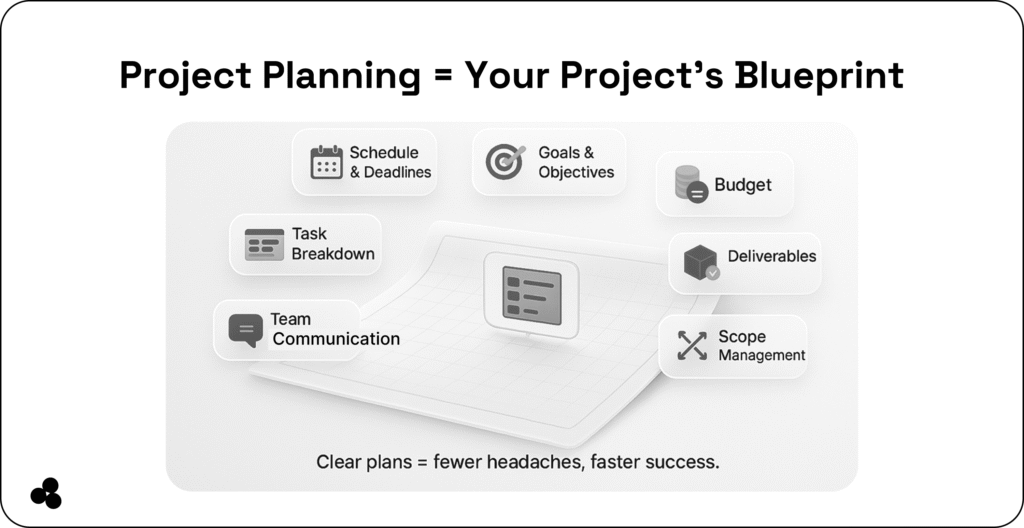
A comprehensive project plan should include:
- Scope – Define what is within and outside the project.
- Objectives – SMART goals that are Specific, Measurable, Achievable, Relevant, and Time-bound.
- Tasks & Milestones – Break down deliverables into manageable steps.
- Resources – Allocate people, budget, and equipment efficiently.
- Schedule – Timeline with start and end dates, dependencies, and deadlines.
- Risk Management – Identify potential issues and plan contingencies.
- Communication Plan – Define who needs updates, how, and when.
🗂️ What is the difference between a project plan and a schedule? The project plan encompasses the whole strategy and resources, while the schedule focuses on timelines and deadlines.
The Project Planning Process: Step by Step
Follow these steps to create an actionable plan:
- Define objectives & scope – Align with stakeholders on goals.
- Identify tasks & milestones – Break the project into phases and actionable steps.
- Allocate resources & budget – Assign tasks and set realistic budgets. (What Is a Good Profit Margin?)
- Build the schedule – Use Gantt charts or software to track dependencies.
- Plan for risks & contingencies – Mitigate potential delays or issues.
- Review & approve plan – Confirm that stakeholders agree with the approach.
- Monitor, adjust & control – Track progress and adapt as needed.
💡 Tip: Using tools like Microapp Dev Blueprint AI can streamline planning, especially for complex projects.
Tools & Techniques for Project Planning
Modern project planning relies on tools that simplify scheduling, tracking, and collaboration:
- Gantt charts & Kanban boards – Visualize progress and dependencies.
- Project management software – Tools like Asana, Trello, or your internal systems. (Check how you can simplify your project management)
- AI-assisted planning – Use AI to estimate timelines, allocate resources, and automate routine tasks
- Time & cost management tools – Understand the value of tasks (Time Value of Money) and budget efficiently.
🗂️ What’s the best tool for project planning? It depends on the size and complexity of your project. Start simple, then scale with software or AI tools.
Real-World Example: Planning for Success
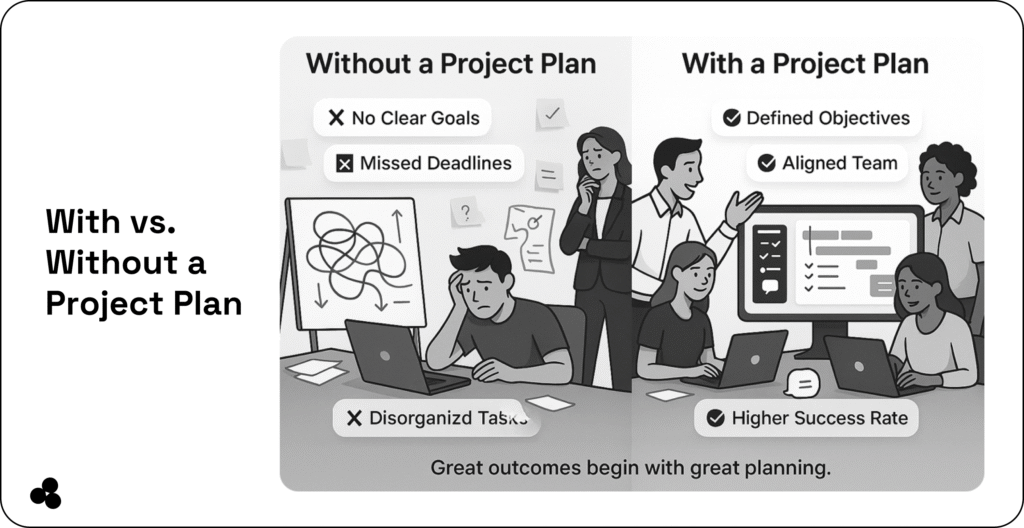
Imagine launching a new software product. Without a plan, you might miss deadlines, overspend, or deliver incomplete features. A productive project plan would:
- Define scope and deliverables.
- Break tasks into milestones with assigned owners.
- Allocate a realistic budget and resources.
- Use software to track dependencies.
- Review and adjust as needed.
The result? A smoother launch, an aligned team, and satisfied stakeholders.
📚 Worthy read: learn more about SQL for project databases: What Is SQL?
How a Project Plan Differs From Other Project Elements
|
Comparison |
Definition |
Key Difference |
|
Project Plan vs. Work Plan |
A list of big-picture action steps needed to achieve project objectives. |
They are the same thing; different teams may prefer one term. |
|
Project Plan vs. Project Charter |
A project charter outlines the project used to get stakeholder signoff before work begins. |
A project charter comes before the project plan and includes objectives, scope, and responsibilities at a high level. The project plan is more detailed. |
|
Project Plan vs. Project Scope |
The project scope defines the size and boundaries of the project. |
The project scope is a component of the project plan; it helps prevent scope creep by setting clear boundaries. |
|
Project Plan vs. Agile Project |
Agile project management is an iterative framework that promotes collaboration and adaptability. |
Agile projects can benefit from having a project plan before execution, but Agile focuses on iterative workflows rather than a fixed plan. |
|
Project Plan vs. Work Breakdown Structure (WBS) |
A WBS visually breaks deliverables into smaller tasks to aid execution. |
A project plan covers every aspect of the project, while a WBS focuses on deliverables and task breakdowns, often in visual formats like Gantt charts or Kanban boards. |
Take Control of Your Projects Today
Effective project planning is crucial for achieving project success. By defining objectives, allocating resources, setting timelines, and preparing for risks, you set your project—and your team—up for success.
✅ Start by implementing a clear step-by-step project plan.
✅ Use tools and AI to streamline the process.
✅ Track progress, adapt, and communicate consistently.
💡 Final Tip: Don’t wait until problems appear. A strong project plan today saves time, money, and stress tomorrow.
Tags